
GARDEN | LISTENING TO THE LANDSCAPE | SOUNDSCAPING
GARDEN | LISTENING TO THE LANDSCAPE | SOUNDSCAPING
A beautifully designed garden is always visually pleasing, but the most inviting outdoor spaces engage all the senses. Beyond landscape design, there is another, often overlooked layer: soundscaping, the intentional shaping of what you hear as much as what you see, feel or smell. Done well, it can transform even a modest garden into a space that feels calming and deeply restorative.
Words by Natasha Were.
LISTEN FIRST
Every successful soundscape begins with attention. Notice the natural acoustics of your space: where the trade winds move most freely, where unwelcome noises drift in and where moments of near silence exist. Let this awareness guide your design decisions about where to soften, where to shield and where to amplify the sounds that nature already provides.
SOFTENING THE UNWANTED
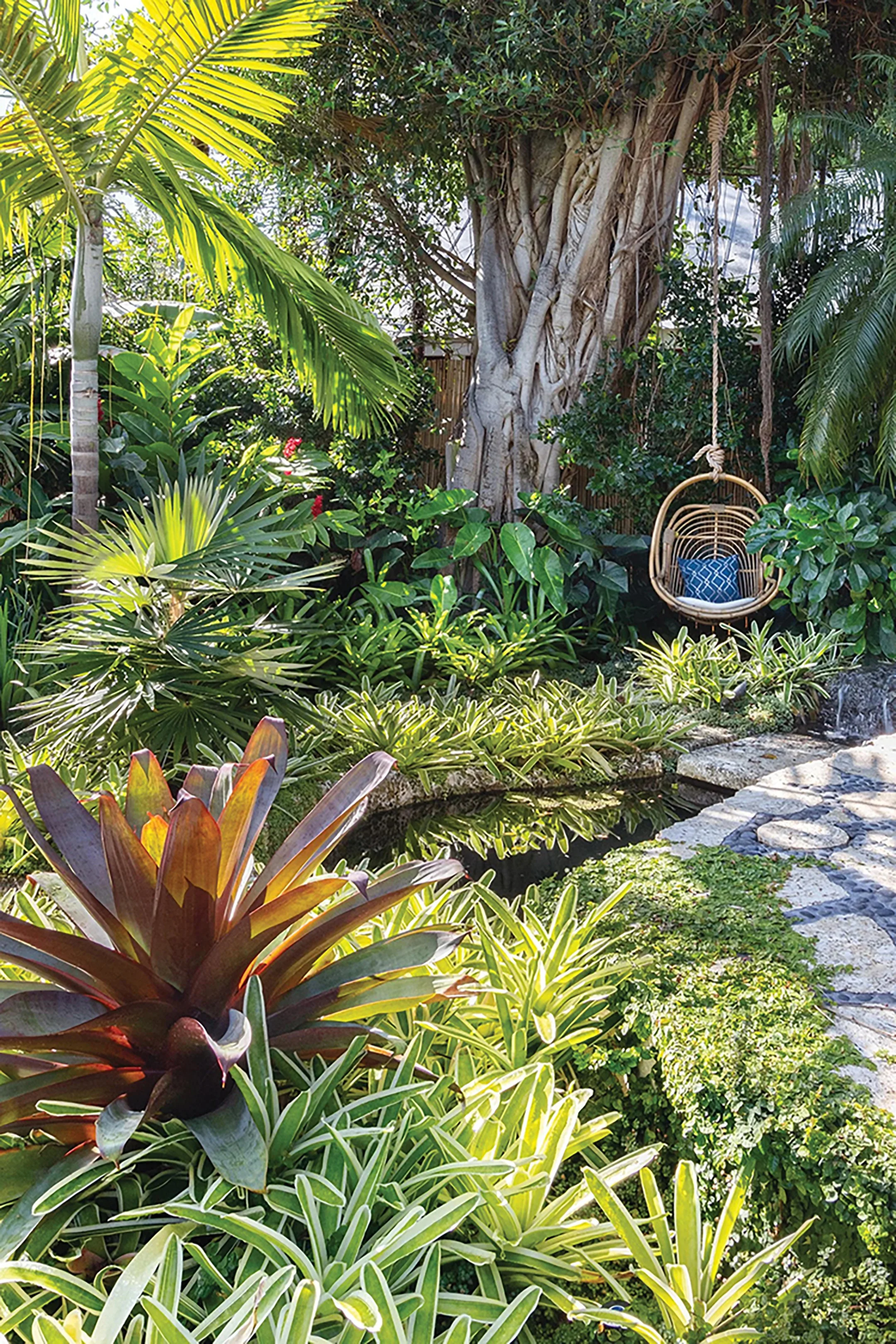
Both materials and plants play a quiet but powerful role in dampening intrusive noise. Solid stone walls, timber screens and engineered wood fencing help prevent sound from travelling through gaps, while dense hedges and shrubs, especially those with thick, waxy leaves, absorb and diffuse ambient noise. Other plants create a soundtrack of their own when positioned to catch the breeze. Whispering grasses, swaying palms and gently knocking bamboo mask intrusive sounds with something far more lyrical.
THE ROLE OF WATER
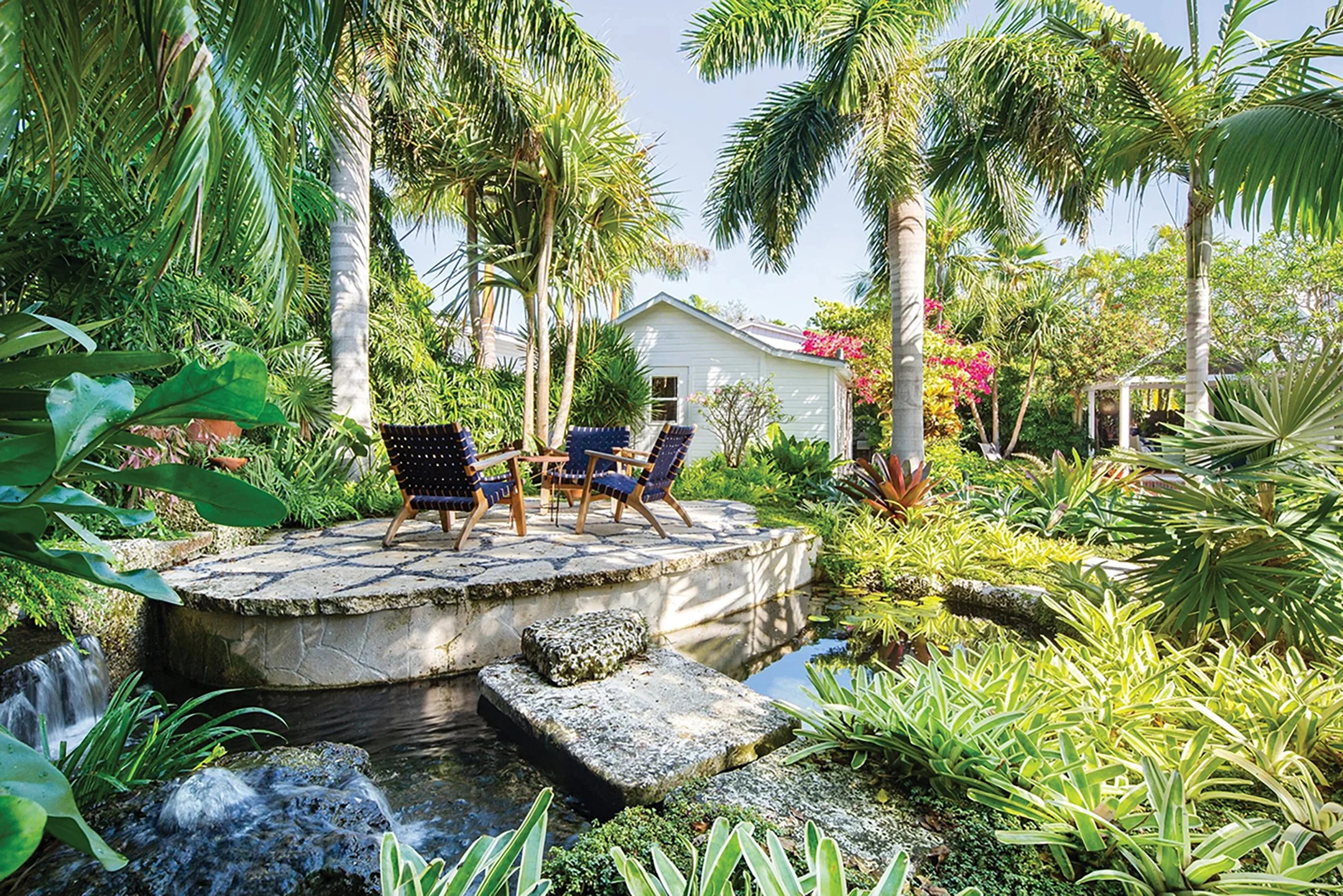
Moving water has long been a cornerstone of outdoor design, valued as much for its acoustics as for its cooling effect. A softly trickling fountain, a perimeter overflow pool or a discreet rain curtain introduces a restful murmur that feels both soothing and sophisticated. The key is subtlety. Aim for a soft, continuous background sound, rather than splashing or abrupt, intermittent noises.
WELCOMING WILDLIFE
Few sounds are as evocative as birdsong at dawn, the gentle hum of insects in the afternoon heat, or the chirping of tree frogs after rain. Bird baths, feeders and berry bushes invite feathered visitors. Vibrantly coloured, sweetly scented flowers attract pollinators, while small ponds and damp, shady spaces create a home for tiny tree frogs. Providing a habitat for wildlife not only enriches the sensory experience but also supports a healthy, thriving garden. The result is a living soundscape: one that shifts gently with the time of day and season.
UNDERFOOT ACOUSTICS
Hard surfaces such as stone and concrete reflect sound, while softer, porous materials such as bark chips, mulch or earth absorb it. Gravel, pebbles and timber decking each produce their own subtle acoustic response underfoot, adding another layer of auditory richness as you move through the space.
TECHNOLOGY, DISCREETLY APPLIED
Weatherproof speakers concealed among planting allow for an even greater variety of sound. Rather than distributing speakers evenly, consider placing them selectively to create pockets of music or natural sound, balanced by areas of silence. Keep the volume low and the choices considered; the aim is to complement the garden’s own voice rather than compete with it.
A thoughtfully designed soundscape lends an outdoor space a sense of calm and connection to its surroundings. Much like lighting transforms a garden after dark, sound design reshapes how it is experienced throughout the day. Soundscaping is subtle, yet when thoughtfully applied, it can be transformative.