
DESIGN | SAFEGUARDING THE LANGUAGE OF PLACE | CAYMAN ISLANDS
DESIGN | SAFEGUARDING THE LANGUAGE OF PLACE | CAYMAN ISLANDS
Echoes of Elgin – The Gifford Anderson House
Update – March 2026
The cottage has secured a reprieve. The National Trust has brokered a deal between the Cayman Islands Government and the developers of One GT to relocate the structure to the Bobby Thompson Roundabout, where it will be preserved on Crown Property in perpetuity. Relocation costs are being shared between the developer and the Cayman Islands Government, with RCIPS, CUC, Flow, the NRA and PWD all involved in coordinating the move.
A section of the rear wall has already been removed, but the Trust confirmed that this was a later cement addition, and the original wattle-and-daub core remains intact and will be saved. While preservation in situ was always the preferred outcome, the Trust acknowledged that once the land was sold to the One GT developers, demolition was otherwise inevitable, making this a rare and hard-won victory for Cayman's built heritage.
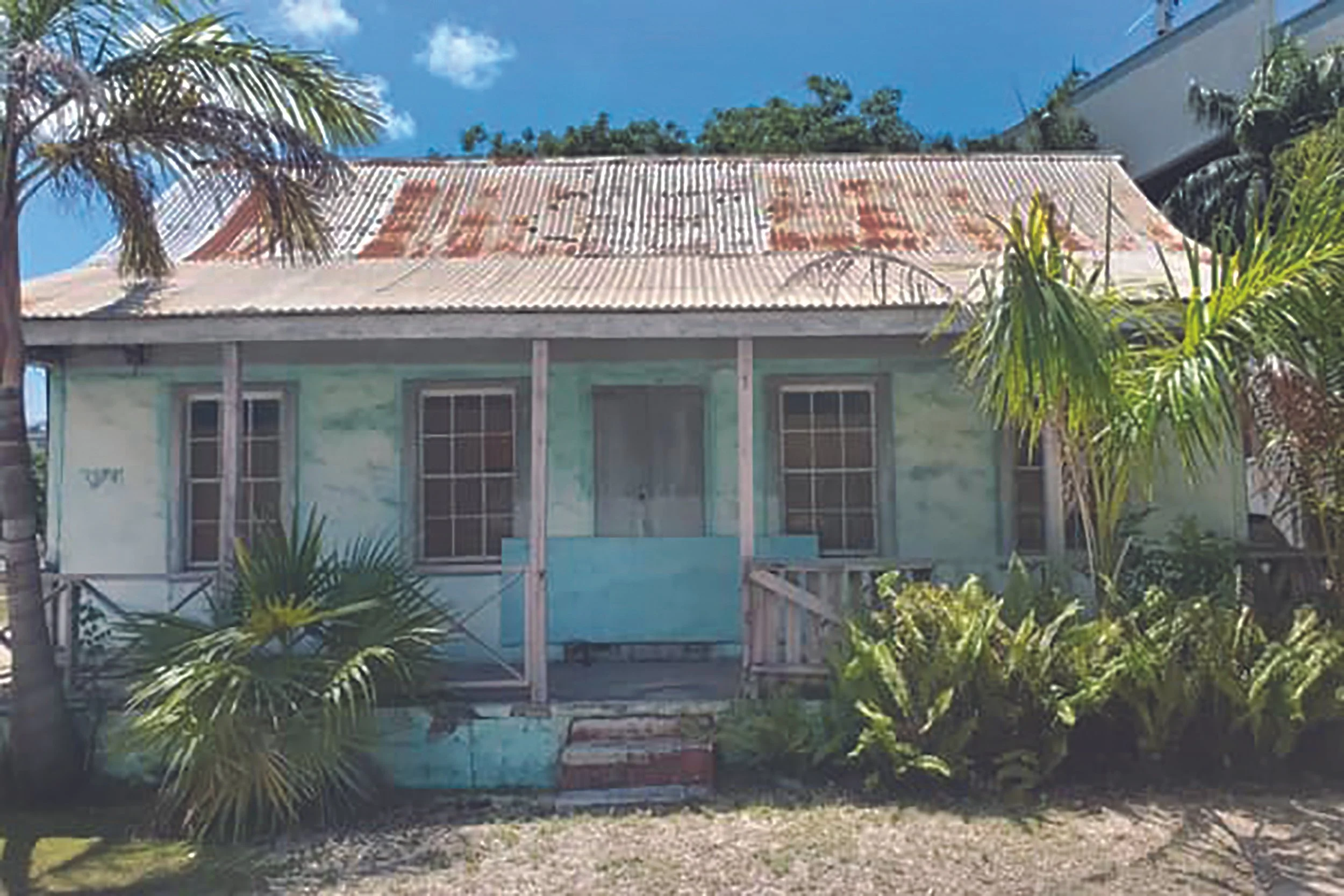
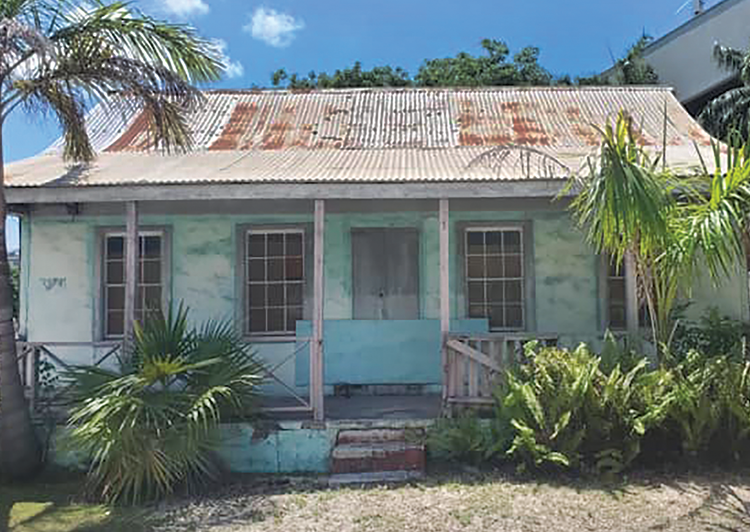
Built circa 1875, this humble wattle-and-daub cottage endures as a rare link to Cayman’s architectural past – a quiet witness to the island’s evolving story. Nestled at the end of Elgin Avenue in George Town, bordered by breeze-swayed palms, stands one of Cayman’s most serene symbols of resilience. The Gifford Anderson House, is a single-storey wattle-and-daub cottage raised on ironwood stilts, its whitewashed walls weathered to a silvery sheen that gleams in the late afternoon light. It is modest, yes – but its timbers echo the rhythm of Cayman’s earliest architecture and the memories of the families who once called it home.
An Architecture of Ingenuity
The house reflects a vernacular tradition born of necessity and ingenuity. Early Caymanian builders utilised what the islands provided – ironwood, silver thatch, mahogany and sand quarried from the ironshore. Wattle-and-daub construction involved interwoven wild-sage branches daubed with coral lime and marl; the resultant structure was a flexible skin that ‘breathed’ with the climate. White limewash kept termites at bay and reflected sunlight, while broad eaves and shutters allowed the persistent trade winds to flow through.
The roof, steeply pitched in corrugated zinc (replacing earlier shingles), was designed to shrug off heavy rains and catch the wind just enough to ventilate. The ironwood posts, dense and salt-resistant, lifted the house above ground moisture and flooding. The underneath of the home, typically used for storage, reminds us that home and livelihood were inseparable.
A central hall floorplan, common to 19th-century Caymanian dwellings, balanced symmetry and airflow: two front rooms flanking the main hall, a small kitchen extension to the rear and deep verandahs for shade. Narrow tongue-and-groove boards line the interior, hand-planed and fastened with square nails, now rusted smooth with time. It is an architecture of adaptation – graceful, purposeful, entirely of place.
Layers of Time
Like most homes of its era, the Gifford Anderson House bears the marks of continual repair. A concrete verandah was added in the mid-20th century, followed by a block rear room in the 1970sand a newer zinc roof was installed sometime after. Yet beneath those pragmatic alterations lies the original skeleton of a bygone Cayman – simple, functional, deeply sustainable before the word existed.
The cottage’s story also reflects family continuity. Generations of Caymanians have lived beneath its eaves, connected by family ties to the Anderson and Llewellyn families, whose roots in George Town date back over a century. Their kinship weaves through the island’s social fabric, connecting seafaring, carpentry and community life. In this modest home, daily routines – cooking, mending nets, rocking children to sleep – formed the quiet heart of Cayman’s early domestic life.
A Fragile Survivor
With development pressure mounting, the National Trust for the Cayman Islands issued an urgent appeal to save it from demolition. The Trust’s photographs show peeling whitewash and sagging joists, yet also the rare survival of intact wattle panels and original joinery – features now almost extinct in Grand Cayman’s building stock.
Without a built heritage protection law, preservation rests on community goodwill and private initiative. Relocation, while imperfect, is the only path to survival. Specialists must catalogue every beam, brace and board before lifting it, rebuilding elsewhere plank by numbered plank. Even moved, it will retain the geometry and craftsmanship that make it so rare.
Lessons in Sustainability and Design
To modern viewers used to glass façades and sealed interiors, these old cottages seem charming. Yet their design foresight aligns with every principle of sustainable architecture: passive cooling, renewable materials, low carbon footprint, resilience against wind and flood. The arrangement of openings, the balance of shade and sunlight, and the thermal mass of lime plaster are some elements that contemporary architects revisit.
Reinterpreted today, the form of the Cayman cottage could inspire a new island vernacular – one that honours heritage while embracing innovation. A handful of contemporary architects have already begun referencing its proportions, its airy cross-ventilation and its honest use of local materials. The Gifford Anderson House stands as both model and muse.
A Living Memory
Walking across its creaking floors is to experience the heartbeat of time. The ironwood door, worn smooth at the latch, bears the touch of countless hands. Even its imperfections – such as a listing corner or a patched eave – speak of care, improvisation and endurance.
Despite its fragility, the cottage remains an anchor – a tangible link between old Cayman and the islands’ modern rhythm. It reminds us that beauty is not always grand, nor heritage gilded. Sometimes, it is found in the quiet endurance of a humble home that has outlasted storms, owners and fashions, still standing to tell its story.
Preserving the Past, Inspiring the Future
The National Trust’s campaign to save the Gifford Anderson House is about more than just one building. It is about safeguarding the language of place – the rhythm of craftsmanship that defines Cayman’s identity. Whether ultimately restored on its original site or reborn on new ground, its survival will stand as proof that progress and preservation can coexist.
And so, beneath the rustle of palms on Elgin Avenue, the little house waits – walls breathing, shutters trembling in the breeze – as Cayman decides what parts of its story it chooses to keep.